Share a little good energy.
A running fan is not proof that steam is leaving the house
If a bathroom stays steamy, the fan is unusually noisy, or paint begins to peel around the ceiling, there may be a ventilation problem worth evaluating. A damp mirror by itself does not diagnose a faulty motor: room temperature, shower length, airflow, an obstructed duct, and the path to outdoors can all affect what you see.
The U.S. Environmental Protection Agency advises using bathroom exhaust fans to remove moisture outside—not into an attic. Its remodeling guidance adds an important distinction: a running fan still needs to move enough air. In rainy Western Washington, ask a concrete question: Where does this fan exhaust, how much air reaches the outside, and can everyone in the household operate it consistently?
Five useful checks you can make without touching wiring
You can make a good service brief without removing a grille, opening a switch plate, entering an attic, or testing live equipment. Keep hands away from wet electrical equipment and leave fan disassembly to someone who can do it safely.
- Record which bathroom has the problem, whether the fan starts every time, and whether its sound has changed.
- Note whether fog and visible condensation linger after a typical shower and whether the problem is seasonal or year-round. Do not run extra-long showers just to reproduce it.
- From the room, look for visible staining or peeling paint near the fan or ceiling. Photograph only what you can safely see.
- Identify any existing wall timer, humidity control, or ordinary switch and whether family members regularly leave the fan off.
- Write down the make/model only if the label is already visible without dismantling equipment. Keep older service records or remodeling plans handy.
Compare airflow, sound and controls—not just the price
Airflow is commonly listed in cubic feet per minute (CFM), while fan sound is rated in sones. A quieter fan is often easier to live with, but it still must suit the bathroom and the actual duct system. ENERGY STAR certification considers efficiency, noise, and performance under resistance—not merely a marketing claim about quiet operation.
The U.S. Department of Energy’s Building America guidance describes 20 CFM for continuous bathroom spot exhaust or 50 CFM for intermittent spot exhaust as reference minimums in its checklist; the appropriate project design and local requirements must be checked rather than treating those figures as a universal replacement size. A contractor should evaluate the room, duct, airflow, and operating mode together.
A manual switch gives the household control but relies on someone remembering to use it. A countdown timer helps the fan continue after a shower. A humidity sensor can start or boost the fan when moisture rises, but it does not correct a disconnected duct or poor airflow. A continuously operating fan used for whole-home ventilation is another design question; changing it to on-demand operation without reviewing the ventilation plan can be a mistake.
The exhaust route matters as much as the fan
One of the highest-value questions in an upgrade quote is whether the exhaust actually terminates outdoors. An attic, crawlspace, or other enclosed area is not a substitute for an exterior termination. The duct route, its condition, connections, backdraft damper, and exterior opening can all limit useful airflow even when a new fan has a large number printed on the box.
Ask the installing contractor whether the existing duct is compatible with the proposed model and whether the project includes checking the outside termination and delivered airflow. The DOE Building America checklist specifically calls for assessing existing duct material, diameter, length, damper, and manufacturer requirements. Do not go onto a roof or enter a tight attic to perform this inspection yourself.
Built-in humidity sensing or a smarter wall control?
Two manufacturer examples show why you should decide how you want the fan to operate before choosing equipment. Panasonic’s WhisperSense DC fan offers built-in humidity and motion sensing, selectable 50, 80 or 110 CFM airflow, and an adjustable humidity setting. Broan-NuTone’s P82W is instead a separate humidity-sensing wall control: it responds to a rapid humidity rise, and its instructions require a neutral conductor. These are different approaches, not interchangeable parts or products Live Wire claims to have installed or tested.
Ask whether the existing fan and control wiring support the proposed approach, whether the sensor will perform as intended in that location, and whether a timer or manual override is useful for the household. Confirm compatibility, enclosure and duct dimensions, power requirements, and the current installation manual before ordering. If a fan is to be located in a tub or shower zone, the electrician must check the exact model listing, manufacturer instructions, and required protection. A sensor never compensates for an undersized or disconnected exhaust duct.
Ask for one complete scope, not just a new fan box
A like-for-like fan replacement, a new exhaust route, a humidity-sensing control, and a new electrical circuit are different projects. In a home with an older bath fan, the written estimate should state which trade handles the electrical connection, ducting, exterior termination, ceiling repairs, and any required permit or inspection. Do not assume those items are automatically included.
Washington Labor & Industries explains that electrical permits and inspections generally apply to electrical work, with exceptions and different authorities depending on the address. Ask the electrician to confirm whether the planned scope needs a permit and who obtains it. Lynnwood, Bothell, and Everett addresses should be checked individually rather than assuming one county-wide permitting rule.
A useful quote also identifies the fan model, control behavior, how airflow will be evaluated, and what the homeowner will need to maintain. If the bathroom is part of a whole-house ventilation strategy, make that explicit before changing its operation.
- Exact fan and controls, plus available access to the housing and duct.
- How the exhaust reaches the exterior and who verifies it.
- Who handles electrical permits, ductwork, patching, and any additional trades.
- What the contractor will check at handoff, including operation and manufacturer maintenance instructions.
When to call for help instead of trying another fan
If water is contacting electrical equipment, you notice burning odors, hear unusual buzzing, or see damaged wiring, stop using the affected equipment and seek qualified help. Do not open the housing or repeatedly operate a suspect switch to demonstrate a problem. Active fire or immediate danger requires leaving the area and calling 911.
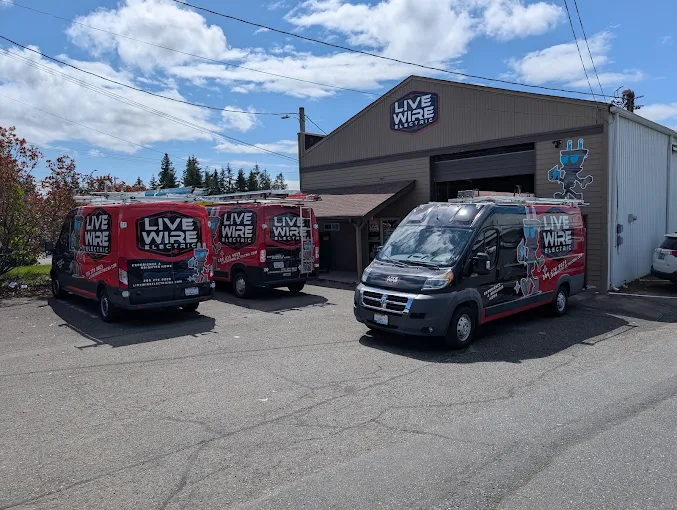
For a routine upgrade, gather the brief notes above, the existing fan model if known, and two or three photos of the room taken safely from the floor. Live Wire Electric is based in Lynnwood and helps homeowners in King and Snohomish counties with electrical problems, installations, and inspections. Discuss the electrical and control portion of a bath-fan project with our friendly crew, along with any ventilation or finish trades the full scope may require.
Quick answers before you buy
Does a foggy mirror always mean the fan is broken? No. It is a reason to look at overall moisture removal, the room, and the exhaust path, not a diagnosis of a motor failure.
Will a humidity sensor fix a weak bathroom fan? It can automate operation, but it does not repair a blocked or undersized duct or an inadequate installation.
Should I buy the highest-CFM fan I can find? Not automatically. The selected fan must suit the room, ductwork, controls, manufacturer instructions, and applicable requirements. A coordinated design is better than a bigger box.
Can I replace the fan myself? Describe and photograph ordinary visible conditions safely, but electrical connections, fan support, duct termination, and permit questions belong with qualified personnel.
Helpful sources
Official guidance for a closer look.
- EPA: What are the main ways to control moisture in your home?
- EPA: Remodeling Your Home and Indoor Air Quality
- ENERGY STAR: Ventilation Fans Key Product Criteria
- DOE Building America: Bathroom Exhaust Fan checklist
- Washington L&I: Electrical Permits, Fees & Inspections
- Panasonic: WhisperSense DC fan specifications
- Broan-NuTone: P82W Sensaire humidity wall control

From our crew to your home.
Live Wire Electric
We’re your Lynnwood-based electrical crew, helping homeowners understand their options and plan their next step.
Meet your local crewA good idea is better shared.