Share a little good energy.
Start with the model, year and installation manual
Before ordering electrical work, send the electrician the exact spa model, model year and manufacturer's installation instructions. Include the electrical specification sheet and any dealer-supplied subpanel information. A showroom description or the size of the old breaker is not enough to specify the new installation.
Some spas use a cord and plug; others are hardwired. Certain models allow a manufacturer-approved conversion, while others do not. Even within one collection, the connection and protective equipment can differ. Ask the dealer which configuration you are purchasing and how it affects heater and jet operation. Do not buy a generic spa breaker kit or assume every hot tub needs the same circuit.
Ask about GFCI protection, the disconnect and bonding
These are separate parts of the safety plan. GFCI protection reduces shock risk by interrupting a ground fault. A disconnect provides a way to isolate equipment for servicing. Bonding is another consideration: the electrician must determine which equipment and surrounding conductive parts need to be connected together under the applicable requirements.
Washington's spa rule addresses equipment listing, environmental suitability and maintenance-disconnect placement, and requires following manufacturer instructions. Have the electrician confirm the complete arrangement and location with the inspection authority. Receptacles, disconnects and other equipment do not all have interchangeable placement rules. Do not choose a location from a single distance quoted online.
Plan the foundation, drainage and working space together
Confirm the foundation can support the filled spa and its occupants. For an elevated deck, have a qualified building professional evaluate the load before placement. Ask the local building department about any separate construction or barrier requirements; an electrical permit does not answer every site question.
Keep the equipment compartment accessible and consider where rain and sprinkler water travel. Leave room for servicing, the cover mechanism and normal access to protective devices. The delivery team also needs its own route assessment, including gates, corners, steps and overhead obstructions. A path wide enough for someone to walk through may not accommodate the spa and delivery equipment.
Check available capacity before assuming an upgrade
An empty breaker position does not establish that the home can support the spa. The electrician should assess the proposed load alongside existing heating, cooking, charging and other equipment, then check the panel and electrical service. Provide details about other projects you expect to add.
A service upgrade is not automatic. The assessment may show adequate capacity, or it may identify changes that need a separate scope and utility coordination. Ask what supports the recommendation and whether an approved alternative spa configuration changes the result. Replacing a panel alone does not increase the capacity of the utility supply.
A plug-in model still needs a suitable supply
A plug that fits does not prove the outlet or circuit is suitable. Ask the electrician to verify the required supply, GFCI arrangement, receptacle, weather protection and cord reach against the actual manual. Some cord-connected models require a dedicated circuit; plug-in does not mean sharing whichever outdoor outlet is nearest.
Do not use an extension cord or an improvised adapter to reach the spa. For a replacement hot tub, have the existing wiring and protective equipment assessed against the replacement model. The previous spa working there does not establish compatibility or the condition of concealed wiring.
Include permits and the complete wiring route in the estimate
New spa circuit wiring requires an electrical permit and inspection. The contractor obtains the permit for work they perform. In King and Snohomish Counties, the job's actual address determines whether a listed city or Washington L&I handles the electrical permit. Confirm that authority before scheduling.
Walk the route from the panel to the final spa position. Ask who handles excavation, utility locating where digging is planned, access through walls and restoration of landscaping or paving. Leave wiring methods, conductor selection and burial requirements to the electrician. Compare quotes for the complete route and finished condition, rather than only the connection at the tub.
Coordinate delivery, connection and inspection as separate steps
Arrange the site and supply work before delivery, but do not assume every electrical task or inspection can be finished before the spa arrives. The final connection may require the tub in its installed position. Agree on that sequence with the dealer and electrician, including who returns after placement.
Required inspections must happen before work is concealed. Keep trenches or other work accessible until the inspection authority permits covering. Clarify who requests inspections, handles any corrections and confirms when the spa can be filled, energized and used under its startup instructions. Delivery alone is not approval to use it.
Finish with operating instructions and a clear stop rule
Ask for a walkthrough of the normal shutoff and manufacturer-directed GFCI testing, plus the permit record and inspection result. Keep these with the spa manual and installation invoice. Establish who to call for an electrical supply problem and who services the spa itself.
Stop using the spa and arrange professional assessment if protection trips unexpectedly, a device fails its normal test or equipment appears damaged. Do not bypass protection or repeatedly reset it to keep bathing. If you feel shock or tingling in the water, get out without touching metal if possible. Keep others out, call 911 and turn off power from a safe, dry location if you can. Never enter suspected energized water to attempt a rescue.
Helpful sources
Official guidance for a closer look.
- Hot Spring: pre-delivery instructions by collection and year
- Washington WAC 296-46B-680: spa equipment requirements
- Hot Spring: 2026 Highlife preparation and electrical guidance
- Hot Spring: 2026 Hot Spot supply and cord requirements
- Seattle City Light: capacity, load and electrical service
- Washington L&I: electrical permits and contractor responsibilities
- Washington L&I: city inspection jurisdictions
- CPSC: electrical shock safety around pools and spas

From our crew to your home.
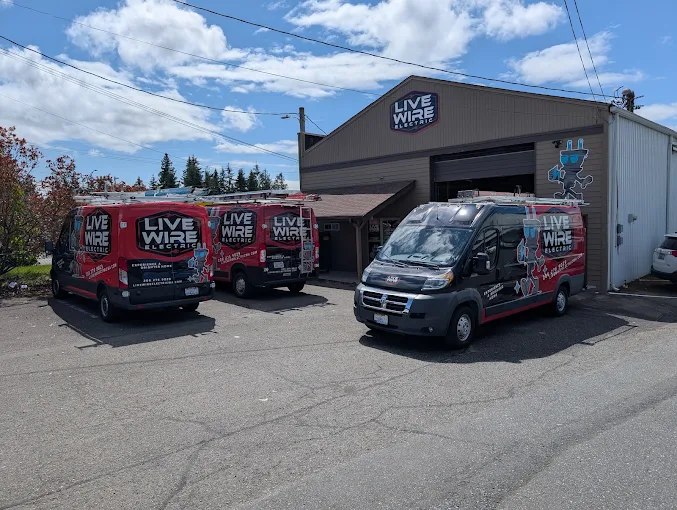
Live Wire Electric
We’re your Lynnwood-based electrical crew, helping homeowners understand their options and plan their next step.
Meet your local crewA good idea is better shared.