Share a little good energy.
Give both options the same job
Start with the household tasks you want to preserve: refrigeration, a few lights, charging phones, a sump pump or heating equipment. Separate those priorities from appliances you could leave off. Tell the installer about motor-driven equipment and planned additions; a name on a checklist is not enough to size its electrical demand.
Compare proposals against the same list and outage scenario. Ask which loads will be supported, which must be managed and what would require a larger system. A whole-home connection does not automatically mean every appliance can run together for as long as you want.
- List essential loads, optional loads and equipment that needs an individual assessment.
- Describe previous interruptions at your address without assuming the next one will last the same time.
- Decide who will monitor the system and adjust normal household use during an outage.
Compare power and runtime separately
Power, measured in kilowatts (kW), describes how much a system can supply at a time. Stored energy, measured in kilowatt-hours (kWh), helps describe how long a battery can support a load. A large energy capacity does not by itself establish that the system can start a particular motor or support several large appliances together.
Ask for a runtime estimate tied to your proposed loads, usable battery capacity, reserve settings and operating conditions. Conversion losses and changing demand matter. Treat an estimate as a planning scenario, not a guaranteed number of hours. DOE's storage guide explains why power capacity and energy capacity are distinct.
A generator needs fuel and a service plan
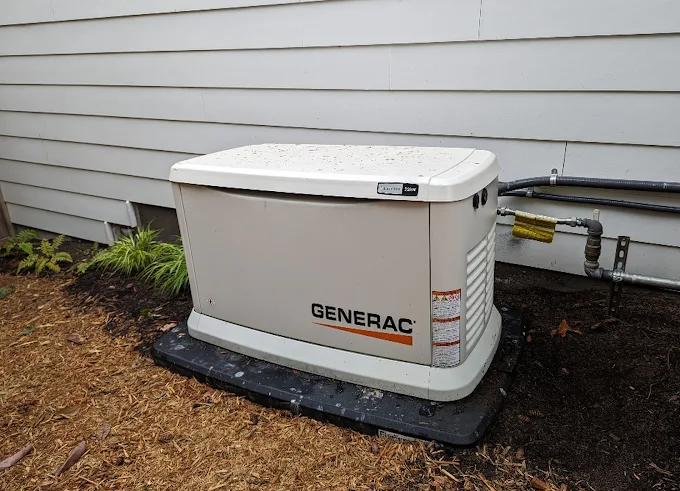
Many residential standby generators use natural gas or propane and start automatically through a properly designed transfer system. Confirm the selected model, available fuel supply and the loads its rating supports. For propane, ask how tank capacity and consumption affect the outage plan; for natural gas, have the fuel provider and installer confirm the proposed connection.
Fuel availability is only one limit. A generator connected to natural gas does not have an indefinite, maintenance-free runtime. Generac's continuous-use guidance includes model-specific checks and shutdowns during extended operation. Agree on required service, safe access and any interruption while that work is performed before relying on the system through a long outage.
A battery needs an outage recharge plan
A battery begins an outage with the energy available at that moment. Reserve settings and normal operating modes affect that starting point. Ask the installer to explain those settings and which ordinary appliances to avoid during backup operation. Tesla's owner guidance, for example, explains that reducing energy-intensive loads extends Powerwall backup time.
Solar can help recharge a compatible battery during an outage, but the equipment must be configured to operate when the grid is down. Standard grid-connected solar alone generally shuts down with the grid. DOE's resilience guidance explains the need for an appropriate inverter and storage arrangement. Have the proposal address low-solar conditions and what happens when stored energy runs out.
Check where the equipment can safely live
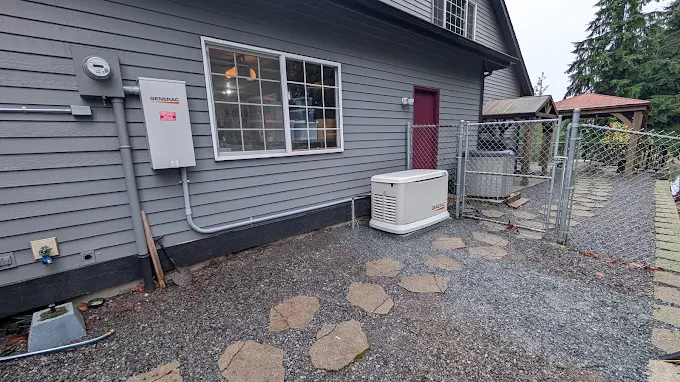
A standby generator has an engine and exhaust. Its location must follow the exact installation instructions and applicable requirements, with room for service. Ask the installer to assess openings, neighboring spaces, drainage, fuel routing and future landscaping. Do not borrow clearance distances from another model or a portable generator.
A home battery supplies stored electricity without burning fuel at the house, but it is not automatically silent or free of owner responsibilities. Powerwall 3, for example, has a cooling fan and requires clear airflow. Check the selected battery's approved location, access, environmental limits, care instructions and service arrangements. Do not open either system to investigate a fault.
Confirm how backup starts and systems work together
Ask how the proposed equipment detects an outage, transfers supported loads and returns to utility power. Confirm expected interruptions with the installer. Treat sensitive equipment separately instead of assuming every backup system guarantees uninterrupted operation.
Combining a generator and battery requires an approved design. It does not automatically let the generator recharge the battery. Tesla's published Powerwall arrangement, for example, specifically says Powerwall does not charge from the generator. Request a clear operating sequence for the exact products, including depleted storage and loss of internet access.
Compare complete installation and ownership costs
An equipment price leaves out much of the decision. Request an itemized scope covering electrical work, transfer or control equipment, mounting, fuel work where applicable, permits, inspections and restoration. Ask who handles utility coordination and whether any interconnection approval is needed for the proposed arrangement.
Washington L&I says most electrical work requires a permit; the hired electrical contractor obtains its own permit. Confirm the authority for your address and who closes out each inspection. Include scheduled service, monitoring arrangements and warranty conditions when comparing ownership, without assuming a particular rebate or electricity-bill saving.
Choose the plan your household can use
Bring your priority list, existing equipment information and proposed future loads to the conversation. Ask Live Wire Electric about the home's electrical requirements and generator options, and confirm the installer qualifications and available scope for any proposed battery product.
Before handover, request the supported-load list, normal owner controls, status alerts, service contacts and maintenance instructions. Ask for a demonstration within the agreed commissioning scope. Keep an independent contingency for needs that cannot tolerate an interruption; no household backup proposal eliminates every possible failure.
Helpful sources
Official guidance for a closer look.
- DOE: solar energy and storage basics
- Generac: standby generator FAQs
- Generac: continuous-use maintenance
- Tesla: Powerwall outage guidance
- DOE: solar and resilience basics
- Generac: backup generator installation planning
- Tesla: Powerwall 3 placement and airflow requirements
- Tesla: combining systems with Powerwall
- Washington L&I: electrical permit basics
From our crew to your home.
Live Wire Electric
We’re your Lynnwood-based electrical crew, helping homeowners understand their options and plan their next step.
Meet your local crewA good idea is better shared.