Share a little good energy.
Put useful supplies where everyone can find them
Check your emergency kit before storm season and after using it. PSE's checklist starts with supplies for at least three days, including household members and pets. Treat that as a starting point for your circumstances; access, medical needs and a longer disruption may call for more.
Keep flashlights or headlamps in familiar places, with working batteries and a charged phone power bank. Choose lighting that does not depend on an open flame. Store drinking water, food you can prepare without normal kitchen power and a manual can opener. Add warm layers, hygiene items, essential supplies and copies of important contacts.
- Check battery condition and expiration dates rather than only counting supplies.
- Keep a radio and its power source available for updates if mobile service is disrupted.
- Tell the household where the kit is stored and keep the access route clear.
Identify what depends on electricity
List the systems you rely on: heating controls and fans, well or sump pumps, refrigeration, powered doors, communications and medical equipment. Ask the appropriate provider what will work without utility power and which owner procedures are safe. Do not assume a gas appliance operates normally just because its fuel is available.
If someone uses powered medical equipment, make a plan with their care team and equipment supplier for suitable backup power, its limits and a place to go if needed. Ask your utility about its medical account arrangements, but do not treat registration as guaranteed power. PSE explicitly says Life Support status does not guarantee service or priority restoration.
Report the outage and use the right updates
Save the outage reporting details for the company that supplies electricity to your address. Sign up for its alerts where available. Report your outage through its official channel rather than assuming a neighbor's report covers your home.
Restoration times are estimates. Snohomish County PUD explains that information can be delayed while damage is assessed and estimates may be unavailable during a major storm. Use official updates to inform your plan, without postponing an essential safety decision until the estimate expires.
Stay away from fallen wires, damaged service equipment and anything touching a line. Report the location from a safe place; do not move branches or inspect the damage. Call 911 for a life-threatening situation. Turn off ordinary cooking and heating appliances that were operating when power failed, where their controls are safely accessible.
Keep warmth and food safety in the plan
Use layers and blankets, and move to your planned safe location if the home no longer meets your household's needs. Never use a gas oven, charcoal grill or outdoor fuel-burning equipment to heat indoors. Washington's Department of Health warns about carbon monoxide from improvised indoor heating.
Keep refrigerator and freezer doors closed. FDA says an unopened refrigerator keeps food cold for about four hours; a full freezer approximately 48 hours, or 24 hours when half full. Keep appliance thermometers and a cooler with ice or frozen packs available. Follow FDA's time-and-temperature guidance when deciding what to discard; appearance or smell cannot establish safety.
Use a portable generator only with a safe operating plan
CPSC says portable generators belong outdoors at least 20 feet from homes and buildings, with exhaust directed away from windows, doors and vents. Never operate one in a garage, shed, basement or other enclosed space, even with doors open. Follow the manufacturer's wet-weather instructions without moving it into an enclosed area.
Never plug a generator into a wall outlet to feed the house. Any connection to household circuits needs a properly designed installation by a qualified electrical contractor. Confirm the equipment, supported loads, permits and operating instructions before an outage; do not improvise connections in the dark.
Keep working CO and smoke alarms with battery power or backup, installed and tested as directed. If an alarm sounds, get outside immediately and call 911. A generator's CO shutoff feature does not make indoor use safe.
Review the backup system you actually have
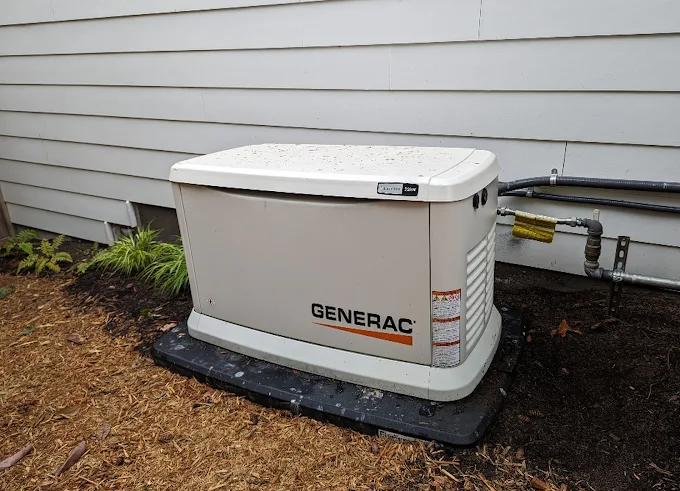
For a standby generator, keep the exact owner's manual and service record available. Confirm the supported loads, normal status indicators, exercise schedule and maintenance due with your provider. Extended operation can require checks and service interruptions; automatic starting does not remove those responsibilities.
For a battery, confirm the reserve settings, supported appliances and outage recharging arrangement. Ask what happens when stored energy is depleted. A generator or battery proposal should explain its limits against your household priorities. Installed standby equipment follows its own location and clearance requirements; the portable-generator distance above is not its installation rule.
Check conditions before returning to normal
Power returning does not establish that storm-damaged equipment is safe. Keep away from wet appliances or damaged electrical equipment and arrange qualified assessment before use. Do not enter a flooded space to reach a switch or attempt to dry out and re-energize equipment yourself.
For undamaged equipment, follow the manufacturer's restart instructions and your utility's guidance. Check food temperatures and any backup-system alerts. If only part of the home has power, report that detail to the utility and arrange electrical assessment rather than repeatedly resetting devices.
Use what you learned to improve the next outage plan
Write down which supplies were missing, what stopped working and whether the backup system supported the intended loads. Replenish the kit, recharge portable batteries and review service needs after substantial generator use. Keep observations factual so the next contractor conversation starts with useful information.
If electrical improvements are needed, ask Live Wire Electric to assess the scope before choosing equipment. Discuss your priority loads, existing capacity, installation route, permits and any utility or fuel coordination. Request the service and handover details as part of the proposal, with timing based on the actual project.
Helpful sources
Official guidance for a closer look.
- PSE: emergency kit checklist
- PSE: household emergency planning
- PSE: Life Support status and restoration limits
- Snohomish County PUD: outage center
- Washington DOH: power outage safety
- FDA: food and water safety during outages
- CPSC: generator, carbon monoxide and storm hazards
- Generac: continuous-use maintenance for standby generators
From our crew to your home.
Live Wire Electric
We’re your Lynnwood-based electrical crew, helping homeowners understand their options and plan their next step.
Meet your local crewA good idea is better shared.