Share a little good energy.
Why the November clock change is a useful alarm check
Washington clocks turn back on Sunday, November 1, 2026. That is a timely reminder to check the alarms that are easy to forget above the bedrooms, in the hallway and on each level of the house. The date itself does not determine when a detector expires; its manufacture date and the manufacturer's instructions do.
Washington State Patrol recommends testing smoke and carbon-monoxide (CO) alarms at least monthly. It also recommends replacing batteries in battery-operated units when clocks change. The U.S. Fire Administration advises replacing smoke alarms at 10 years from manufacture, even if they still respond to the test button. A sealed-battery alarm and a hardwired alarm with a replaceable backup battery require different maintenance, so check the exact model first.
For Lynnwood, Everett, Bothell and nearby King and Snohomish County households, this guide focuses on what homeowners can observe safely: locations, dates, labels, the audible warning and the system description. It is not a wiring tutorial or a substitute for emergency response.
A room-by-room checklist that does not involve opening wiring
Start with a simple floor plan. Count the sleeping rooms, sleeping areas, basements and finished upper levels, then mark where each alarm is located. Under Washington residential code Section R314, required smoke-alarm locations include each sleeping room, immediately outside separate sleeping areas and every additional story, including basements and habitable attics. Placement has other rules, including separation from bathroom openings; a remodel or new location should be reviewed against the complete code and device instructions.
Carbon monoxide alarms answer a different danger. Washington's Section R315 describes CO alarms outside separate sleeping areas and on each level of a dwelling, with additional instructions for certain sleeping rooms containing fuel-burning equipment. Whether and how an existing house must be upgraded can depend on its age, occupancy and project; the location guidance is still a sensible safety conversation for all households.
A small paper list is more useful than an assumption that one hallway alarm covers every bedroom. Record the approximate year, visible model label if safely accessible, whether the unit is hardwired or battery-only, and whether alarms are supposed to sound together. Do not remove a cover or climb unsafely to inspect a high ceiling.
- Look for an alarm in every bedroom and outside each separate sleeping area; note every story, including a basement.
- Identify the CO alarms separately; smoke detection and carbon-monoxide detection are not interchangeable.
- Use each unit's accessible TEST control in accordance with the manufacturer instructions, and listen for the expected response.
- Note any silent, missing, damaged, painted-over or persistently chirping device, along with its model and location.
- Discuss uncertain placement, a new bedroom or an attic conversion with the appropriate building/fire authority and a qualified installer.
A chirp is not the same thing as a full smoke or CO alarm
People often say an alarm is beeping when they mean several different signals. An occasional chirp may indicate a low backup battery, end-of-life warning or another device fault. The actual pattern, light color and recommended action vary by model. Do not use a guessed number of chirps as a universal diagnostic chart: find the manufacturer's specific instructions.
A continuing, loud smoke alarm or a CO alarm could indicate immediate danger. Treat a potential fire or carbon-monoxide event as real: get everyone outside and call 911. Do not investigate a suspected CO event by waiting indoors, restarting appliances or arranging a routine electrician visit. Washington State Patrol explicitly advises immediate evacuation for a CO alarm.
A low-battery warning is not permission to disable the detector, leave the battery out or silence the entire interconnected system indefinitely. For a stubborn nuisance alarm near cooking or shower steam, use the approved hush feature when appropriate and have the location and detector type evaluated rather than removing protection.
Why a hardwired alarm still needs replacement
Hardwired means a smoke alarm receives its normal power from the home's wiring; it does not mean its sensing components last forever. The U.S. Fire Administration says to replace a hardwired smoke alarm every 10 years, and to test it monthly. Its traditional hardwired backup-battery advice applies to units with a replaceable battery; a sealed-backup model follows its own instructions and may need the entire unit replaced at end of life.
Check the manufacture date, not just the date the house was purchased or the alarm was installed. If you cannot establish the alarm's age, or the unit is damaged or fails its prescribed test, arrange replacement. Carbon-monoxide alarm service life varies by device; follow the labeled end-of-life date and manufacturer instructions rather than automatically applying a smoke-only rule to every combined unit.
If you have several interconnected alarms installed at different times, record the make, model, approximate age and how the network is supposed to behave. An electrician can verify the replacement scope without assuming a simple one-for-one swap will preserve interconnection.
Can you replace a Kidde, FireX or First Alert alarm with another brand?
Not automatically. A new device can physically fit on a mounting plate and still be wrong for the existing wiring, communication method or connected alarms. First Alert cautions against assuming cross-brand hardwired compatibility. Kidde offers specific adapters for certain First Alert/BRK-to-Kidde replacements, but says that compatibility must be checked by exact existing and proposed model numbers; its KA-B3 adapter is not universal.
Even an adapter that fits a harness is not proof that every smoke and CO signal will be shared with every other alarm. Ask whether the proposed devices are listed as compatible for your whole interconnection arrangement, what type of alarms the connected circuit supports, and whether model-specific manufacturer approval is documented.
A complete system replacement may be more appropriate than mixing generations of devices. For a newer listed wireless interconnection system, Washington's residential code recognizes qualifying wireless arrangements when activation of one alarm causes the others to sound; it does not endorse ad hoc mixing. Leave electrical reconnection and interconnection verification to a qualified professional.
What Washington rules mean for an older home or remodel
Washington's residential smoke-alarm rule is more detailed than the phrase 'all alarms must be hardwired.' Section R314 describes required locations, interconnection and power-source standards, along with exceptions for particular existing dwellings and work types. Permitted alterations or new sleeping rooms can trigger requirements, but the code also contains specific exemptions—including certain electrical, plumbing and mechanical system work—from the general alteration-trigger provision.
Carbon-monoxide rules also have important existing-home distinctions, including an exception involving owner-occupied single-family residences legally occupied before July 26, 2009. Do not assume an old house is exempt from every applicable safety, sale or project requirement, or that a smoke-alarm replacement alone forces a complete rewire. Have the permitting authority or qualified professional confirm the rule applicable to your address and scope.
A Seattle craftsman with a half-story attic and side-access spaces may pose different placement and routing questions than a newer Lynnwood home with a straightforward hallway ceiling. In a Bothell home, confirm the actual jurisdiction and serving authority rather than using the city name alone to decide permit responsibility. Code requirements and installation instructions govern the solution, not a generic online device list.
Do not overlook CO alarms during outage season
A smoke alarm does not detect carbon monoxide unless the unit is specifically designed and listed as a combination device. CO is an invisible, odorless hazard associated with fuel-burning appliances and portable generators. Check CO alarm placement and service life separately from the smoke-alarm list; never treat a working smoke-only unit as proof that your household has CO protection.
With wet and windy Puget Sound weather ahead, some homes keep portable generators or heating backup equipment ready. Never run a generator indoors, in a garage or near openings to living spaces, even if a window or garage door is open. An active CO alarm means leave immediately and call 911. This is an emergency-response instruction, not an invitation to test equipment.
For longer-term readiness, keep an escape plan and meeting point, talk through the plan with overnight guests, and review which doors/windows can be used without depending on power. If you are planning backup power, ask your electrical contractor about safe transfer arrangements as a separate project.
When to involve an electrician—and what to include in the request
For a household alarm system that is hardwired, interconnected, damaged or repeatedly signaling trouble, a licensed electrician can assess the wiring and compatible residential replacement scope. Live Wire Electric's published Home Smoke & Fire Alarm Installation service addresses these residential systems; it does not claim to commission every proprietary or monitored commercial fire-alarm system.
The job is not necessarily a single device purchase. The number of alarms, model availability, expected communication between units, power and backup arrangement, ceiling access, new wiring and any required electrical inspection can change the scope. Ask the team to explain which units are being replaced, how the installed system will be verified and what is excluded before approving the work.
Prepare safely by recording the make/model and approximate age of accessible units, noting any recurring warning, listing the rooms and floors and sharing an earlier home-inspection report if one exists. Do not pull down hardwired alarms, alter their connectors or open a ceiling box to gather that information. For an urgent fire or CO event, call 911—not the scheduling widget.
- Is this a basic residential hardwired-alarm replacement, an interconnection upgrade or a specialized system?
- Which exact makes/models are compatible with the existing network, and how will interconnected function be verified?
- Does the quoted scope include all necessary devices, backup batteries, disposal, access and permitting?
- Will the project leave every bedroom, separate sleeping area and required level appropriately protected?
Local support in Lynnwood, Everett, Bothell and nearby communities
South County Fire provides free home safety visits within its service area, including Lynnwood, Edmonds, Brier, Mill Creek and Mountlake Terrace. Its outreach team can help eligible households with battery-only smoke alarms and evaluate common safety concerns; it explicitly does not replace hardwired alarms and directs residents to an electrician or other suitable service provider for that work. Ask about availability and eligibility rather than assuming an automatic installation appointment.
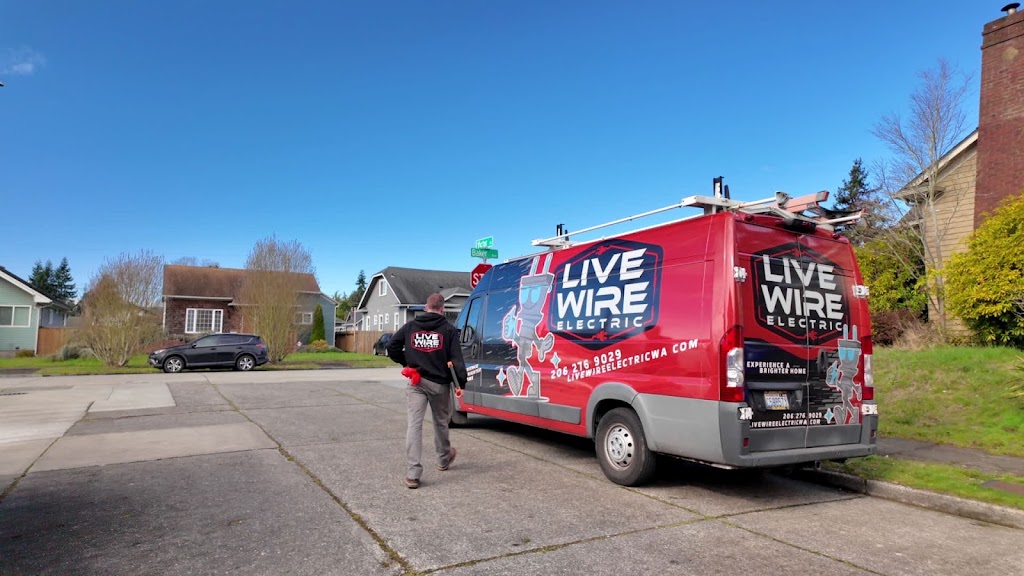
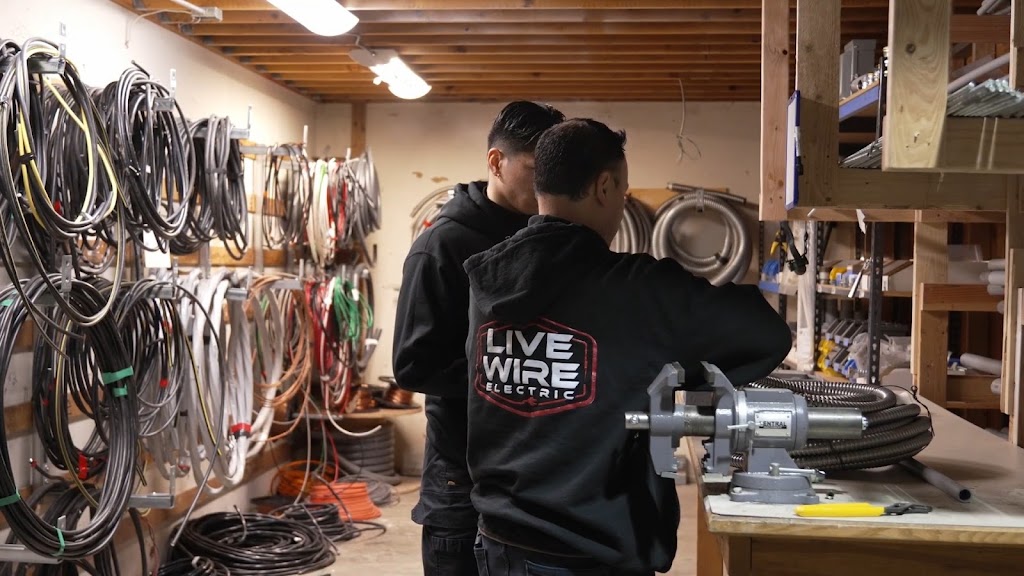
For hardwired residential electrical alarm questions, Live Wire Electric serves homeowners across King and Snohomish counties. The /recent-work archive contains published examples of the company's electrical projects and the /reviews page contains attributed customer feedback. Neither is presented here as evidence of a specific smoke-alarm job, and this article's company photographs are not portrayed as alarm installations.
If a remodel is already planned, bring the alarm question into the project discussion before ceilings are closed. Ask for the work to be evaluated along with the actual layout and permit authority. You can explore Live Wire's local service pages, or call (206) 276-9029 for the next step.
FAQs: chirps, batteries, code and replacement
Does a hardwired smoke alarm need a battery? Many do: its battery supplies backup during power interruptions. Follow the specific model's instructions. Some newer hardwired alarms use sealed long-life backup batteries that are not individually replaced.
Should I replace all alarms when one reaches ten years? At minimum, each smoke alarm at its replacement age needs attention. If multiple interconnected units are similar in age or the new device is incompatible, request a whole-system plan rather than mixing parts by guesswork.
Can steam from a bathroom cause nuisance alarms? Yes, moisture or cooking can cause nuisance activations. The manufacturer, local placement rules and a qualified professional should guide relocation or a different approved alarm type. Do not disable a detector to solve repeated nuisance alarms.
Do I need an electrician for a battery-only alarm? Not necessarily for routine accessible battery-only maintenance permitted by the manufacturer. Hardwired electrical connections, new wiring and uncertain interconnection require appropriate professional assessment.
Is this the same as a monitored commercial fire-alarm system? No. Residential interconnected smoke alarms and commercial fire-alarm control systems have different scopes and service qualifications; confirm the system type before scheduling.
Helpful sources
Official guidance for a closer look.
- Washington State Patrol: Home Smoke and Carbon Monoxide Alarms
- U.S. Fire Administration: Smoke Alarms
- Washington WAC 51-51-0314: Smoke Alarms and Heat Detection
- Washington WAC 51-51-0315: Carbon Monoxide Alarms
- U.S. CPSC: Smoke and CO Alarm Maintenance Before the Clock Change
- Kidde: Model-Specific Smoke Alarm Adapter Compatibility
- First Alert: Cross-Brand Interconnection Compatibility
- South County Fire: Request a Home Safety Visit
- U.S. Department of Transportation: Daylight Saving Time
From our crew to your home.
Live Wire Electric
We’re your Lynnwood-based electrical crew, helping homeowners understand their options and plan their next step.
Meet your local crewA good idea is better shared.