Is Your Knob-and-Tube Wiring Still Safe?
Thousands of Seattle homes still run on knob-and-tube. A licensed Live Wire electrician inspects what's behind your walls and shows you exactly what needs to change.
No obligation · No spam · Licensed (#LIVEWWE844J2)
Prefer to talk? Call (206) 238-0265
What knob-and-tube wiring is — and why older homes need a look
Knob-and-tube was the standard wiring method in homes built roughly between 1900 and 1950. Single copper conductors run through ceramic knobs and tubes, with no ground wire and rubber-based insulation that turns brittle after decades in a wall cavity.
No ground wire
Two-prong outlets can't ground modern appliances or electronics, and there's no path to safely carry a fault to earth.
Aging insulation
Rubber and cloth insulation cracks and flakes off with age and heat, leaving conductors exposed inside walls and attics.
Never sized for modern loads
These circuits were designed for a few lights and a radio — not heat pumps, EV chargers, kitchens and home offices.
Buried under insulation
Knob-and-tube needs open air to shed heat. Attic insulation added over it later is a recognized fire hazard.
Decades of amateur splices
Most of the risk we find isn't the original work — it's junction-box-free splices and extensions added over the years.
Insurance and sale issues
Many insurers and lenders ask for knob-and-tube to be evaluated or replaced before they'll write a policy or close a sale.
Signs your home still has original wiring
If you recognize two or more of these, book an inspection.
- Two-prong outlets with no ground slot
- A fuse box instead of a modern breaker panel
- Ceramic knobs and porcelain tubes visible in the basement or attic
- Cloth-covered cable or exposed, brittle insulation
- Breakers that trip or fuses that blow regularly
- Lights that flicker or dim when an appliance starts
- Warm outlets, switch plates, or a faint burning smell
- Extension cords doing permanent duty because there aren't enough outlets
Three simple steps to safer wiring
From your first request to a clear written scope, we handle the inspection, permits and repairs.
Request your inspection
Fill out the short form and pick a time that works for you. No obligation, no pressure.
Takes about a minuteWe inspect and document
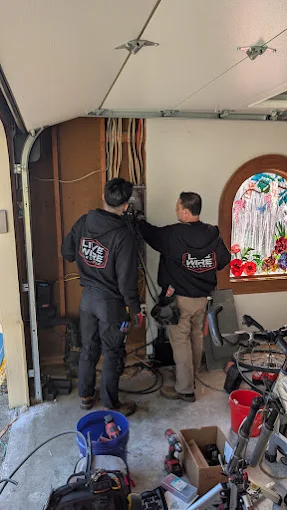
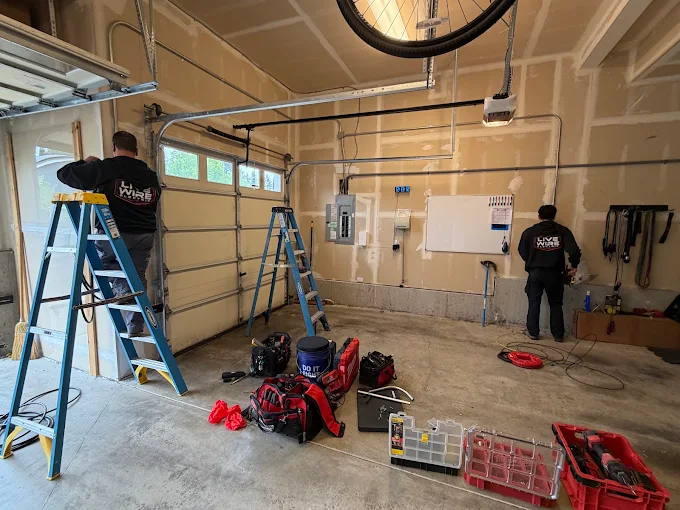
A licensed electrician checks your panel, outlets, attic and basement runs, and reports exactly what's live knob-and-tube and what's already been replaced.
Written findingsRepair, rewire or upgrade
You get options — targeted circuit replacement, a panel upgrade, or a full rewire — with permits and inspections handled for you.
2-year warrantySeattle-area homeowners trust Live Wire Electric
Real reviews from neighbors across King & Snohomish Counties.
★★★★★ 5-Star Rated on Google
★★★★★
"We've used Live Wire for three different projects now—panel upgrade, outdoor lighting, and a whole-home generator. Consistently excellent."
★★★★★
"Professional from start to finish. Clear pricing, clean work, and they walked us through everything before they left."
★★★★★
"Had an emergency with our panel at 10pm. They answered immediately and had someone here within the hour. Saved us from what could have been a disaster."
Why homeowners choose us
Licensed Washington electricians with 25+ years of experience and 5,000+ completed projects.
25+ years of experience
More than 5,000 projects completed across King & Snohomish Counties, including many century-old homes.
Licensed & code-compliant
Washington contractor license LIVEWWE844J2. Permits and inspections handled for you.
24/7 emergency response
Burning smell, sparking outlet or a dead circuit? Our emergency team answers around the clock.
$69 dispatch fee
A flat, upfront dispatch fee — credited toward your project when you book with us.
2-year warranty
Two years on equipment and services — 25 years for members of our $9.95/mo plan.
5-star rated on Google
Homeowners in Seattle, Bellevue, Lynnwood and Edmonds trust our crew.
Questions? We've got answers
What is knob-and-tube wiring?
Knob-and-tube is an early wiring method used in homes built roughly between 1900 and 1950. Single copper conductors run through ceramic knobs and tubes, with no ground wire and rubber-based insulation that becomes brittle with age.
Is knob-and-tube wiring unsafe?
Knob-and-tube is not automatically dangerous, but it has no ground, its insulation degrades over decades, and it was never designed for modern electrical loads. Damaged runs, buried splices and contact with insulation are the common hazards — which is why an inspection matters.
How do I know if my Seattle home has old or knob-and-tube wiring?
Common signs include two-prong ungrounded outlets, a fuse box instead of a breaker panel, ceramic knobs and tubes visible in the basement or attic, cloth-covered cable, and breakers or fuses that trip often. A licensed electrician can confirm during an inspection.
Do I have to replace knob-and-tube wiring?
Not always all at once. Some homes need only the damaged or overloaded circuits replaced, while others are better served by a full rewire. Insurers and lenders often ask for replacement, so we document what we find and give you options.
Can I add insulation over knob-and-tube wiring?
Knob-and-tube relies on open air around the conductors to shed heat. Washington's rules (WAC 296-46B-394) allow loose or rolled insulation around existing knob-and-tube only when specific conditions are met, including written certification by a licensed electrical contractor and proper conductor protection — and foam insulation is not permitted. Have the wiring evaluated before you insulate an attic or wall cavity.
Does Seattle code require me to rip out knob-and-tube?
Not automatically. Seattle's electrical code still includes Article 394 covering concealed knob-and-tube, so its presence alone is not a violation. Replacement becomes necessary when the wiring is deteriorated, improperly modified, unsafe in context, or in the way of planned work. Energized abandoned knob-and-tube must be removed or properly terminated.
Can a home inspection tell me how much old wiring is left?
Only partly. A general home inspection covers what is visible and accessible — the panel, attic, basement and around fixtures — but most wiring is hidden behind finished walls. A focused electrician's evaluation gives you a much clearer picture of the service, panel and visible circuits, which is why homeowners and buyers across King and Snohomish County book one before insulating, remodeling or closing on an older home.
How long does rewiring an older home take?
It depends on the size of the home and how much original wiring remains. Targeted circuit replacements can be finished in a day or two, while a full rewire with a panel upgrade takes longer. You get a written scope and timeline with your estimate.
Find out what's really behind your walls
Book a knob-and-tube and old wiring safety inspection with a licensed Washington electrician. No obligation.
Book My Safety Inspection Call (206) 238-0265
No obligation · Licensed · 24/7 emergency service