Share a little good energy.
Recognize the clues without disturbing the wiring
Knob-and-tube uses individual insulated conductors supported on ceramic knobs, with ceramic tubes protecting passages through framing. Seeing those parts is a reason to ask about the wiring, not proof that a particular run is live. A newer panel or newer-looking outlets also cannot establish that every older circuit was replaced.
Share an existing photo or inspection report with the electrician. Do not enter an unsafe attic or crawl space, pull on wires, move insulation around them or remove electrical covers to investigate. Ceramic supports left behind after a project and wiring still serving a room need different conclusions.
Ask what is active, accessible and still uncertain
Request an assessment of the accessible wiring, its circuit protection, connections and the loads it serves. Ask the electrician to identify damage, deterioration, questionable alterations and any limitations in tracing the system. A short visible section cannot establish the condition of everything behind plaster or above a finished ceiling.
Tell the crew about recurring trips, flickering, unusual buzzing, burning odors or shocks. CPSC identifies these as warning signs that deserve attention. Stop using affected equipment and get qualified help rather than repeatedly resetting protection. If there is smoke or fire, leave the area and call 911.
Get the wiring decision before the insulation crew arrives
Washington does not impose a universal ban on loose or rolled insulation in spaces containing existing knob-and-tube wiring. WAC 296-46B-394 allows it only when all specified conditions are met. These include a licensed electrical contractor's survey and written certification to the department, inspection of electrical repairs or alterations, appropriate circuit protection and qualifying insulation. The rule prohibits foam insulation with knob-and-tube.
Seattle's electrical code includes its own corresponding provisions. Have the electrical contractor and insulation contractor coordinate with the authority for your address before covering anything. This is a professional review and documentation process, not permission to bury unknown wiring or uncover it yourself.
Separate grounding from GFCI protection
Original knob-and-tube circuits lack an equipment-grounding conductor. A three-slot receptacle face does not prove that a grounding path exists. Ask the electrician what the circuit actually provides and what the equipment you intend to use requires.
GFCI protection can reduce shock risk on an ungrounded circuit, but it does not create an equipment ground. CPSC describes properly labeled GFCI replacements for older ungrounded receptacles. Have the electrician determine the permitted arrangement, labeling and any needed circuit replacement; changing the outlet's appearance does not repair deteriorated wiring.
Compare a defined repair, a partial rewire and a broader project
The wiring's name alone does not settle the scope. Seattle's existing-system provisions allow lawful installations to continue subject to their conditions, including safe use and maintenance. They do not excuse hazards or make every alteration acceptable. Ask what must be corrected now and what could be planned with other renovations.
For a partial rewire, list the circuits being replaced and those remaining. For a broader rewire, define the rooms, devices and loads included. Ask how abandoned wiring will be handled; Seattle has specific provisions for accessible out-of-service conductors. A panel upgrade is a separate decision based on equipment condition and the proposed electrical demand, not an automatic consequence of replacing old branch wiring.
Get your insurer's requirements in writing
Insurance decisions are company- and policy-specific. Progressive's consumer guidance notes that insurers may treat knob-and-tube differently and may request an inspection report. Ask your own insurer or agent what information it needs for this property, rather than relying on a neighbor's renewal experience.
Clarify whether the request concerns active wiring, an assessment, replacement, documentation or a deadline. Share that written request before the electrical visit. An electrician's report and a passed permit inspection serve different purposes; neither guarantees that a company will issue or renew coverage.
Make access and finish repairs part of the quote
Discuss possible cable routes before comparing prices. An accessible basement and an open wall present different work from finished ceilings or protected decorative plaster. Ask where openings may be needed, what the quote assumes and how unexpected obstructions will be handled.
Confirm who protects the work area, moves large items, patches openings and matches paint or finishes. Ask about planned power interruptions and which spaces remain usable. Size, access, discovered conditions, inspections and restoration affect the schedule; a generic whole-house duration is not a useful promise.
Keep permits and inspection stages in the plan
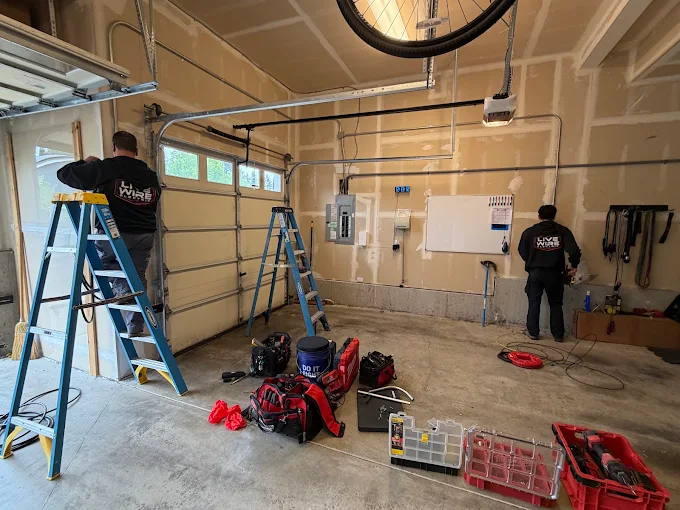
Most electrical work in Washington requires a permit. The hired electrical contractor obtains the permit for its work, and either L&I or the responsible city handles inspection. Confirm the correct jurisdiction and required inspections before the project begins.
Coordinate inspection before work is covered and keep the final results with the invoice, circuit descriptions and any survey documentation. A permit record describes permitted work; it is not proof that every concealed circuit in the house was replaced.
Bring your next project into the conversation
Tell Live Wire Electric whether you are buying, insulating, remodeling or planning new equipment. Bring available reports and explain the decisions you need to make. Ask for findings that separate confirmed concerns, remaining unknowns and proposed work, so the next step has a clear purpose and scope.
Helpful sources
Official guidance for a closer look.
From our crew to your home.
Live Wire Electric
We’re your Lynnwood-based electrical crew, helping homeowners understand their options and plan their next step.
Meet your local crewA good idea is better shared.