Share a little good energy.
Why one house can stay dark after the neighborhood comes back
Storm damage can interrupt the overhead service to one property even after utility crews have restored the surrounding circuit. In Snohomish PUD territory, the utility says a damaged weatherhead belongs to the homeowner and must be repaired by a licensed electrician before PUD can legally restore power. PUD then returns to make the permanent connections and restore service.
That does not mean every piece at every home has the same owner. Weatherheads, masts, meter equipment and utility conductors have different responsibilities, and the boundary can vary by serving utility and service design. The first useful question is: which part is damaged, and who owns that part?
If wires are down or the service is pulled loose, call the utility first
If a line is down, a service drop is hanging low, a tree is touching wires or the meter area looks pulled away from the house, stay back and report it to the electric utility that serves the address. Do not approach for a closer look, move a branch or use a ladder nearby.
Snohomish PUD tells customers to stay at least 30 feet from fallen power lines and assume they are live. PSE’s September 26, 2026 storm-response guidance says never touch or go within 35 feet of downed lines. If there is a fire, injury or life-threatening danger, call 911.
Who fixes what: utility equipment versus customer-owned equipment
Snohomish PUD is unusually clear about its weatherhead rule: the homeowner is responsible for that equipment. PSE’s electric service handbook also assigns customers responsibility for specified equipment beyond the point of delivery, including meter bases or sockets and customer wiring. The exact boundary still depends on the installation.
Seattle City Light separately warns contractors not to connect, disconnect or interfere with City Light equipment unless the utility authorizes it. For King County homeowners, that is another reason not to assume the electrician can simply reconnect the utility wire after a repair.
What the electrician should assess
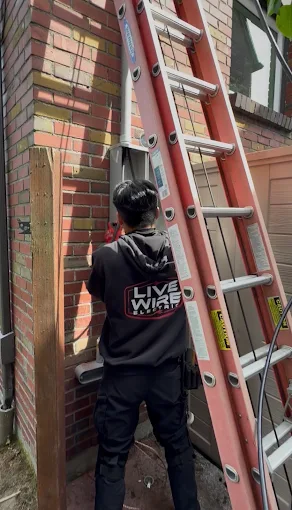
A bent mast or damaged weatherhead can be only the visible part of the problem. The electrician may need to evaluate the attachment point, service conductors, meter enclosure and the connection into the home’s service equipment. Homeowners can help by describing the storm event and relaying exactly what the utility crew said.
Keep observations at ground level and from a safe location. Do not open the meter enclosure, remove panel covers or test damaged service wiring. Ask for a written scope that separates electrical work from roofing, siding, structural repair or tree removal.
Permits and inspection can be part of the restoration timeline
Washington L&I says an electrical permit is required for most electrical work, including many repairs and replacements. Whoever performs the electrical work is responsible for obtaining the permit; a contractor should not ask the homeowner to buy the contractor’s permit.
Current Washington electrical rules list maintenance or repair of a meter or mast, with no service or feeder alteration, as its own inspection-fee category. If the project changes or relocates the service, the permit scope can be different. Some cities perform their own electrical inspections, while other addresses use Washington L&I, so the correct authority depends on the property.
The usual restoration sequence
The order varies by utility and damage, but a storm-damaged overhead service often follows the same handoff: report the outage and line damage; the utility makes its side safe; a licensed electrician repairs customer-owned equipment; the required inspection or release is completed; then the utility makes its connection and restores service.
Ask both parties what they need from the other before dispatch. A useful question is, “What has to be complete before your crew can reconnect?” That can prevent a repaired mast from waiting on an inspection, or an electrician from arriving before the utility has made the service safe.
- Report the outage and any downed or damaged utility line.
- Confirm whether the utility must disconnect or make the area safe first.
- Have a licensed electrician repair customer-owned service equipment.
- Complete the applicable inspection or release.
- Have the utility make its final connection and restore service.
A real Edmonds example of the utility/electrician handoff
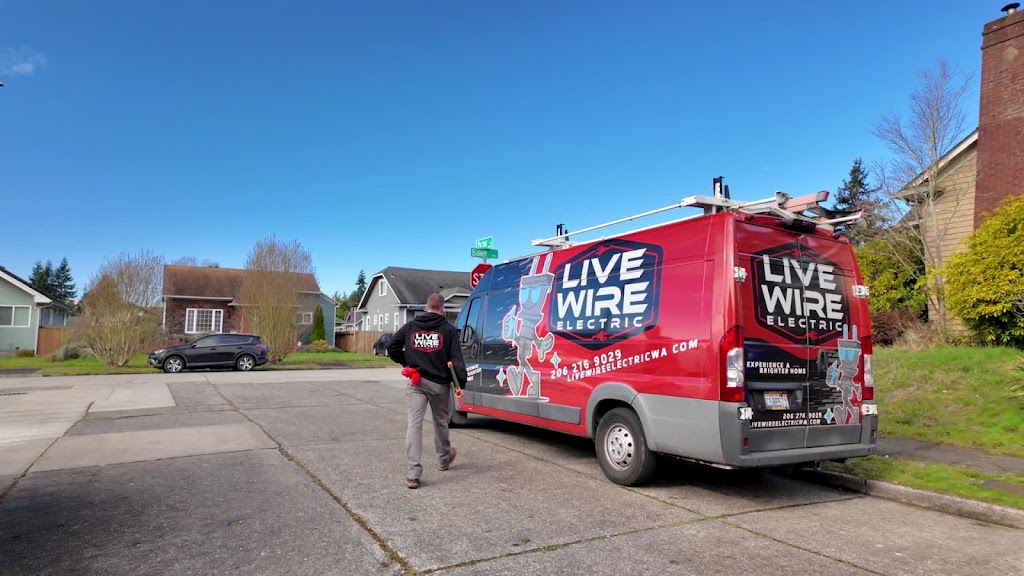
Live Wire’s published project archive includes an October 2025 service-mast and lead-line replacement in Edmonds after a branch interrupted power to a home. The customer reported that Live Wire completed the mast and lead-line repair and Snohomish PUD restored power later that day.
That is historical published work, not a promise of the same schedule for another outage. Storm severity, utility crew availability, inspection requirements and the condition of the home’s service equipment can all change the timeline. What the example shows is the two-part handoff: customer-side repair and utility restoration may both be necessary.
When the utility says the next step is an electrician
If the serving utility identifies damaged customer-owned service equipment, call Live Wire Electric at (206) 276-9029 and describe exactly what the utility told you. Share the address, visible damage from a safe location, the utility ticket number if you have one, and whether the service has already been disconnected or made safe.
Live Wire serves King and Snohomish Counties from Lynnwood. The crew can assess the electrical repair, explain the permitting and utility coordination for the property, and provide a written scope. For a downed line, fire, injury or immediate electrical danger, use the utility or 911 first.
Helpful sources
Official guidance for a closer look.
From our crew to your home.
Live Wire Electric
We’re your Lynnwood-based electrical crew, helping homeowners understand their options and plan their next step.
Meet your local crewA good idea is better shared.