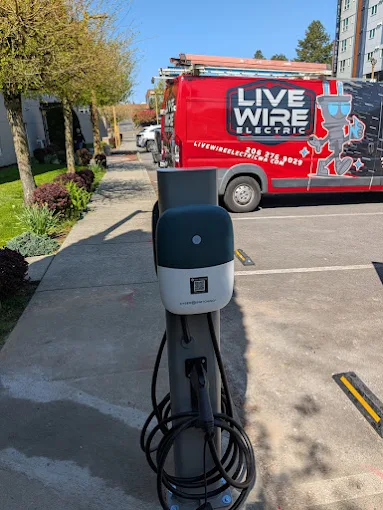
Share a little good energy.
Two capable chargers, two different starting points
The useful question is not which charger has the bigger number on the box. It is which one makes coming home, plugging in and leaving the next morning easiest for your household. A mixed-vehicle driveway in Bothell and a single-car garage in Lynnwood may lead to different choices.
Tesla Universal Wall Connector is worth considering when you want a NACS handle with an integrated J1772 adapter in one unit. ChargePoint Home Flex is worth considering when you want to choose a J1772 or NACS cable, compare hardwired and plug-in versions, or check eligibility for PSE's home-charger rebate.
This guide compares the manufacturers' published specifications and local installation considerations, checked September 28, 2026. It is not a hands-on durability test. First settle the vehicle connection and electrical plan; then compare the complete installed quotes.
Start with the connector your vehicle actually uses
NACS and J1772 describe the connection at the car. Do not choose from the vehicle badge alone: confirm the charging port and AC charging instructions for the exact model and year you own, plus any second vehicle you expect to charge.
The Universal Wall Connector's integrated adapter is convenient when drivers alternate between the two connector types. It still has one charging cable, so it serves one vehicle at a time. ChargePoint sells Home Flex configurations with either connector; select the correct version rather than assuming both handles come in the box.
For a two-car household, walk through a normal week. Can you alternate charging nights, or do both vehicles need to plug in at once? Where will each car park? Solving that routine before buying a second charger is more useful than choosing equipment around an occasional road trip.
The practical differences at a glance
These are equipment specifications, not a promise that your home or vehicle can use the maximum output. The installation setting must match the designed circuit and the car.
- Maximum charging output: Tesla Universal reaches 48 amps, about 11.5 kW at 240 volts. Home Flex can reach 50 amps, or 12 kW, in a suitable hardwired installation.
- Connection to the house: Tesla Universal is hardwired only. Home Flex offers hardwired, NEMA 6-50 plug-in and NEMA 14-50 plug-in configurations. Its plug-in versions are limited to a maximum 40-amp charging setting.
- Cable reach: Tesla lists 24 feet; ChargePoint lists 23 feet. Measure the actual route to the charge port, not just the straight-line distance to the parking spot.
- Everyday controls: Tesla uses the Tesla app for schedules and usage. ChargePoint uses its app for home charging and public-network charging information.
- Manufacturer warranty: Tesla lists four years for residential use; ChargePoint lists three years. Check the applicable written coverage and keep the purchase record. Equipment coverage is separate from your installer's workmanship terms.
48 amps versus 50 amps is rarely the deciding factor
At their maximum ratings, the difference is about half a kilowatt. But an EV that accepts less AC power cannot use the extra capacity. Nor does a 50-amp charger mean the circuit is set up to deliver 50 amps of continuous charging. Both manufacturers list 48-amp charging on a suitable 60-amp circuit; Home Flex needs a different circuit arrangement to reach its 50-amp maximum.
Compare the charging output in your proposed installation, not two manufacturers' advertised miles of range per hour. Those mileage figures depend on the vehicle. Your normal daily driving and the hours spent parked matter more than a headline maximum.
For example, a household with a long overnight parking window may prefer a lower-output installation that meets daily driving needs over paying for electrical changes solely to unlock the highest setting. Someone with long daily mileage and a short charging window may value the additional capacity. Ask for both options when the existing system supports them.
A smart charger is not automatically a load-management system
An app schedule tells a charger when to run. A correctly designed load-management system controls how much power charging can use as conditions change. Those are different jobs. Do not assume that scheduling overnight is a substitute for checking the electrical capacity of the home.
Tesla documents dynamic power management for a single Wall Connector using a separately purchased, Tesla-approved meter. It also documents group power management between compatible Wall Connectors. Its current support page says dynamic management cannot be combined across multiple Wall Connectors, so a two-charger proposal needs a specific design rather than an assumption that every feature works together.
For either brand, have the electrician explain the planned charging output, available capacity and any additional control hardware in the estimate. A new EV does not automatically require a new panel or 200-amp service. Existing equipment condition, other loads and the proposed installation determine the next step.
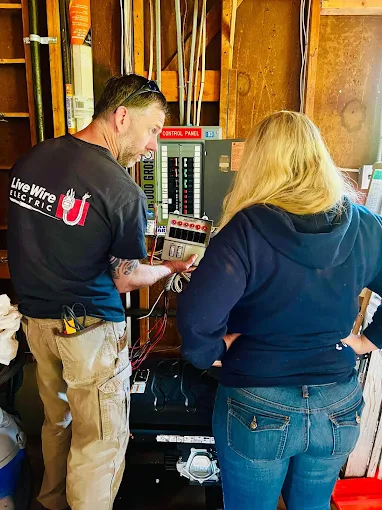
Plan for the driveway, rain and the way you park
Both product families support outdoor installations when installed as specified. ChargePoint recommends hardwiring for an outdoor Home Flex installation; Tesla Universal is already a hardwired-only product. Outdoor-rated charging is designed for weather, but that does not make a damaged connector, flooded equipment or an improvised extension safe to use.
In an Everett driveway or a detached Seattle garage, walk the cable route before choosing the mounting location. Leave a comfortable path around the parked vehicle, protect the cord from being driven over, and avoid creating a trip across the route to the front door. The extra foot of cable matters less than placing the unit correctly.
Have the electrician assess any existing 240-volt outlet instead of assuming it is suitable because the plug fits. Confirm permits and inspection with the authority for the job address. A condominium, shared parking area or rental can also need property approval before work begins.
Local rebates can change the comparison
Start with the utility on your electric bill, not the county name. A PSE gas account alone does not meet the electric-service requirement for its home-charger program. Check the exact service address before counting any incentive toward the project.
As checked September 28, PSE advertises up to $300 for a qualifying home charger. Its linked product list, dated March 1, 2026, includes hardwired and plug-in ChargePoint Home Flex models; Tesla Universal Wall Connector is not listed. Confirm the exact model and current terms with PSE before purchasing. Brand compatibility with your car and rebate eligibility are separate questions.
PSE's application page requires eligible equipment, electric service, Wi-Fi connection and application within 60 days of installation, among other conditions. Income-qualified customers may be eligible for up to $600 toward a charger and up to $2,000 toward installation. Approval and actual eligible costs determine the benefit.
Snohomish County PUD's residential charger page explicitly says its rebate ended December 31, 2025. Do not subtract the old rebate from a new 2026 installation quote, even though the page still displays the former program details below that notice.
Compare the installed project, not just the charger price
A lower equipment price can disappear into a longer wiring route or a different electrical scope. Ask for proposals that solve the same problem at the same planned charging output. That is how you find out whether the difference is the charger, the installation or an optional upgrade.
Bring the vehicle model and year, normal daily mileage, overnight parking window, likely second-car plans and a photo of the parking area. A safely accessible photo of the closed panel can help the first conversation. Leave electrical covers in place; you do not need to investigate wiring to prepare for an estimate.
- Equipment: exact charger model, vehicle connector, mounting arrangement and any separately priced accessories.
- Electrical scope: planned output, circuit route, any capacity work or approved management equipment, permits and inspection.
- Property work: trenching, wall access, finish repairs and who is responsible for each part.
- Handoff: configuration, basic use, account setup responsibilities, warranty documents and the final inspection record.
Good energy starts with a clear local plan
Live Wire Electric plans home EV charging from our Lynnwood base for homeowners across King and Snohomish counties. Start with a free installation estimate. Repair visits are different: the current $69 dispatch fee is waived for active members and credited toward completed work; repair work is quoted separately.
If an assessment shows that a separate panel replacement is needed, the current PANEL-1000 offer advertises up to $1,000 off a new electrical panel. The amount depends on equipment and project scope and must be confirmed in the written estimate. It is not a charger discount, and combining offers with rebates requires approval.
On our reviews page, Tiffany R. describes needing an EV charger installed and begins her published Google-review excerpt with "Great experience!" Read the review context and visit our Proof Pulse page to see the work customers have approved for sharing. Those resources help you get to know the crew without treating a customer review as a product test.
For a new charger in Lynnwood, Bothell or Everett, or an installation elsewhere in our service area, bring us the two model options and your parking plan. We will help you turn the comparison into a defined electrical project. Call (206) 276-9029 to talk with the team.
Three questions before you order
Does a Tesla need a Tesla-branded home charger? No. ChargePoint offers Home Flex with a NACS connector for compatible vehicles. Match the connector and equipment instructions to the actual car, not just the brand name.
Will Home Flex always charge faster because it says 50 amps? No. The configured installation and the vehicle's AC charging limit determine usable power. Compare the output each proposal will actually deliver.
Which option would we shortlist first? For drivers alternating between NACS and J1772 vehicles, look closely at Tesla Universal's integrated adapter. For a household seeking a qualifying PSE rebate or a suitable plug-in option, look closely at Home Flex. Neither feature replaces checking the home's electrical capacity and the total installed cost.
Helpful sources
Official guidance for a closer look.
- Tesla: Universal Wall Connector product specifications, checked September 28, 2026
- Tesla Universal manual: output and hardwired installation requirements
- Tesla: power-management capabilities and limitations
- ChargePoint: Home Flex configurations and connectors
- ChargePoint: before-you-buy specifications and charging rates
- ChargePoint: installation planning resources
- PSE: current EV home-charger rebate requirements, checked September 28, 2026
- PSE: qualified charger list dated March 1, 2026 (PDF)
- Snohomish PUD: ended residential charger rebate, checked September 28, 2026
- U.S. DOE: charging an electric vehicle at home
- Washington L&I: electrical permit and inspection responsibilities
From our crew to your home.
Live Wire Electric
We’re your Lynnwood-based electrical crew, helping homeowners understand their options and plan their next step.
Meet your local crewA good idea is better shared.